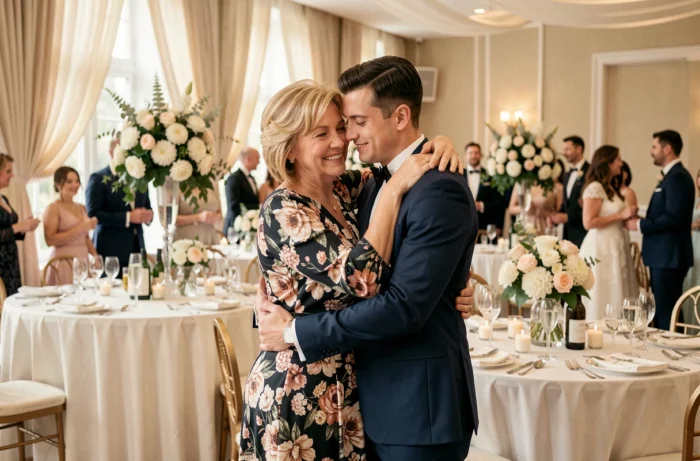
Speaking as the mother of the groom is a unique exercise. The speech does not follow the same codes as that of a best man or the bride’s father: it oscillates between modesty, pride, and transmission, with the added difficulty of addressing your son while including the audience. The formats that work today favor conciseness and a balance between personal anecdotes, welcoming the partner, and projecting into the future.
1. A specific childhood memory, told without filter

Choosing a single, very concrete childhood memory creates a much stronger effect than a list of happy moments. The day your son insisted on fixing his bike by himself at seven, the time he baked an inedible cake for your birthday: these precise details anchor the speech in reality.
The goal is to show a character trait that persists in the adult he has become. Connecting this memory to the person he is today gives the narrative a trajectory, not just nostalgia. Two to three sentences are enough to set the scene before shifting to the present.
A mother of the groom speech to her son gains authenticity when it is based on a moment that no one else in the room could recount.
2. The explicit welcome of the daughter-in-law or partner
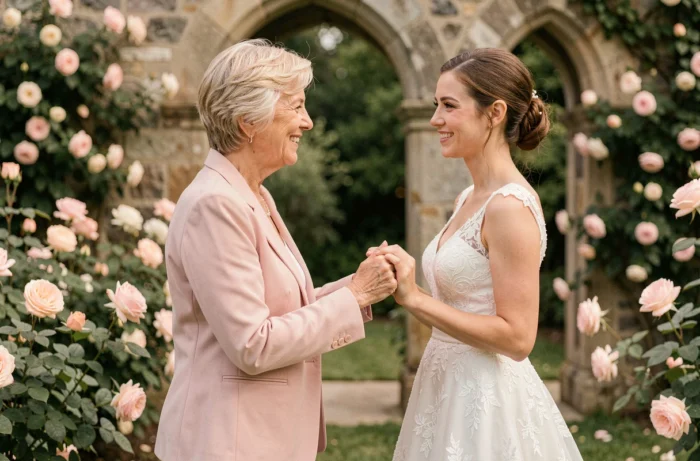
Recent guides recommend dedicating about a quarter of the speech to welcoming the new family member. This section, often rushed or forgotten, transforms a speech focused on the mother and her son into a moment of openness towards the couple.
Name the person, address her directly. Mention a moment shared together, even brief: a meal, a walk, a conversation that left an impression on you. This avoids hollow phrases like “welcome to the family” without real content.
This sequence of sixty to ninety seconds signals to the guests that you are not only talking about the past but fully embracing the couple’s future.
3. The “tender roast” format to diffuse emotion
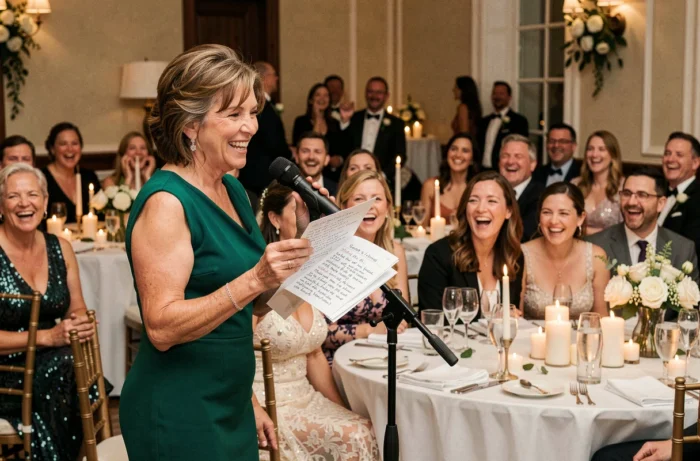
The tender roast consists of affectionately teasing your son about a minor flaw or a well-known habit, before flipping the mockery into a compliment. This format works because it creates a contrast: laughter precedes emotion, and the emotion hits harder.
The unwritten rule is simple: only tease what your son laughs about himself. Mentioning his exaggerated passion for football or his inability to fold a fitted sheet creates a bond with the audience. The shift to seriousness (“but that tenacity is also what makes him a reliable partner”) gives the speech its depth.
4. The letter read aloud instead of the classic speech
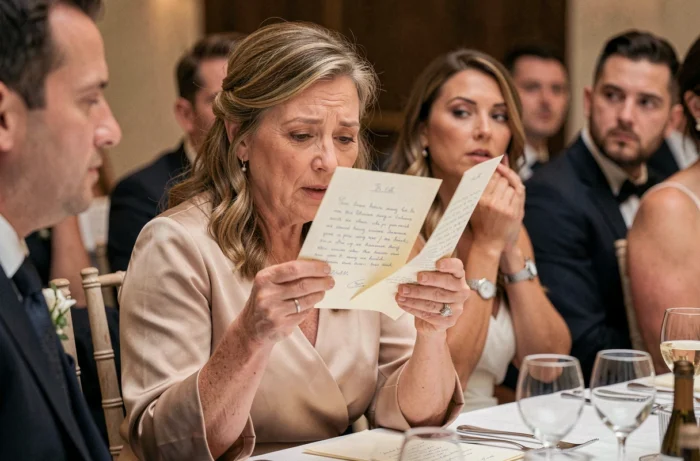
Some mothers prefer to write a letter directly addressed to their son and then read it in front of the guests. This format changes the dynamic: the gaze is fixed on a sheet, the voice becomes more intimate, and the guests become witnesses to an exchange rather than recipients of a speech.
The letter also helps manage stress. Reading a text written by hand, without improvisation, significantly reduces the risk of losing the thread. The epistolary tone allows for shorter, more direct sentences, less “oratorical.”
5. Maternal wisdom conveyed without solemnity
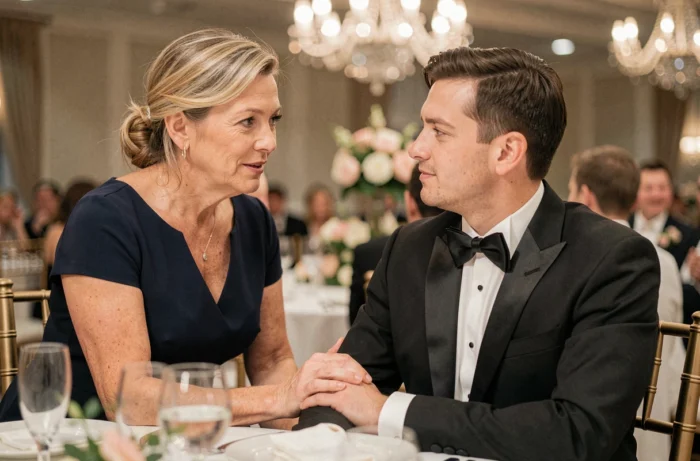
Conveying a life lesson without falling into a sermon requires starting from a lived experience rather than an abstract maxim. Telling how you navigated a difficult moment in your own relationship, or how your parents taught you something by example, anchors the advice in concrete terms.
One well-developed piece of advice is worth more than three clichés strung together. “Learn to be bored together” carries more weight than “love each other, respect each other, communicate.”
6. The short speech of less than two minutes
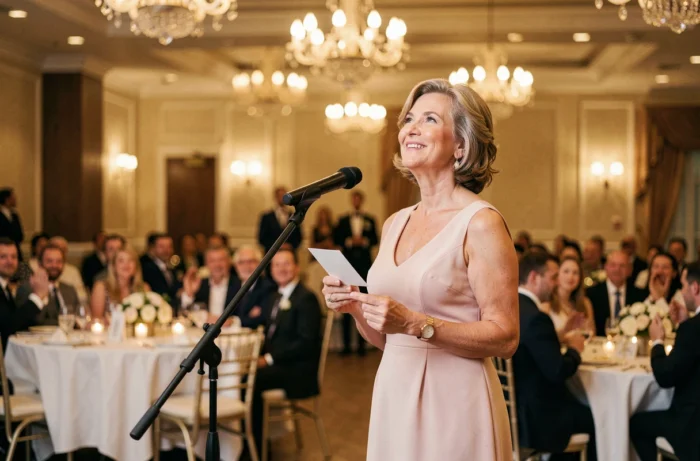
Conciseness is increasingly valued as a true quality criterion. A speech of four to six well-chosen sentences makes a stronger impact than a ten-minute text. Guests remember a strong image, not a monologue.
This format is particularly suitable for mothers who dread public speaking. It requires more rigorous selection work: one anecdote, one message, a toast to conclude. No room for filler.
7. The tribute to those missing from the table
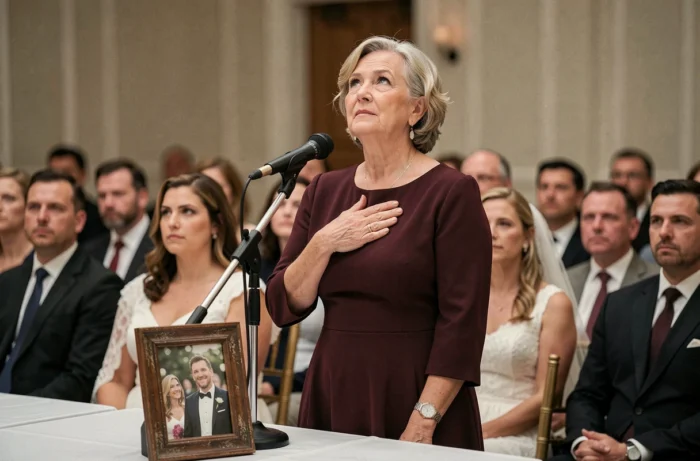
Mentioning a parent, grandparent, or deceased loved one who should have been present gives the speech a measured gravity. This section works when it remains brief: one or two sentences, a name, a character trait inherited by the groom.
The trap would be to prolong this moment to the point of turning the speech into a eulogy. The goal is to connect the absent to the present, not to divert attention from the couple. Immediately following with a wish for the future restores the joyful tone.
8. The speech structured in five parts
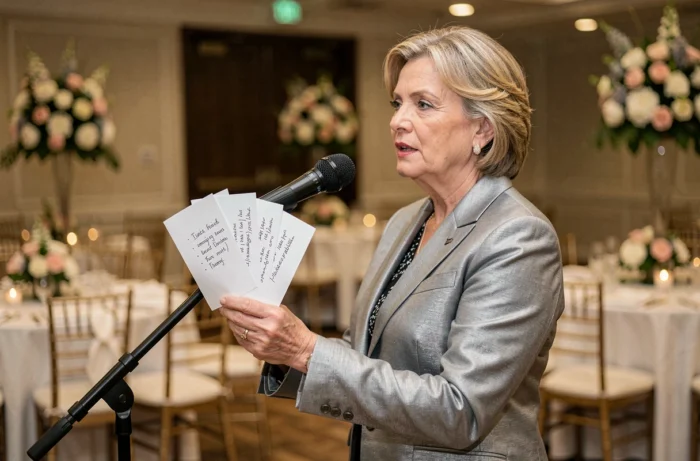
A five-part structure offers a clear framework for those who do not know where to start:
- Briefly introduce yourself and explain your role (especially if not all guests know you)
- Share a specific memory related to the groom
- Welcome the daughter-in-law or partner with a shared moment
- Express a personal wish for the couple
- Raise your glass with a direct toast
This sequencing avoids digressions and ensures that each part of the speech has a distinct function.
9. The duo with the father of the groom to alternate voices
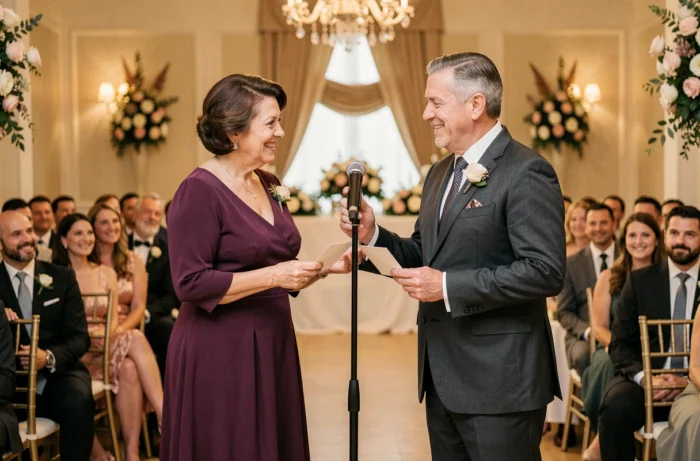
Delivering the speech together, alternating interventions, creates a different rhythm and lightens individual pressure. The father shares a memory, the mother follows with another angle. One teases, the other refocuses on the emotion.
This format requires joint preparation to avoid redundancies or awkward transitions. Rehearsing together at least twice before the big day helps establish the rhythm and ensures that both voices complement each other without overlapping.
10. The final toast that replaces the long speech
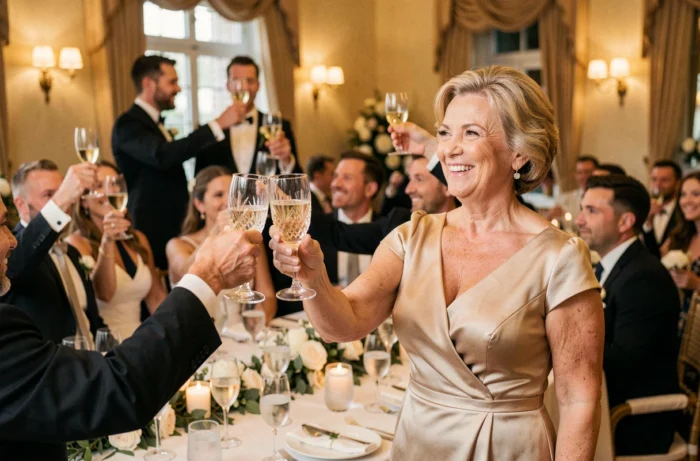
For those who do not wish to deliver a structured speech, a toast alone remains a valid option. Three sentences are enough: an address to the couple, a personal word, and an invitation to raise glasses.
This choice is not a sign of lack of preparation. A sincere twenty-second toast can make as much impact as a long speech, provided that every word is weighed. The toast has the advantage of coming at a moment when the audience’s attention is naturally focused.
Regardless of the format chosen, the common thread remains the same: speak from what you have lived, not from what you think you should say. Guests immediately recognize the difference between a recited text and a heartfelt word. The duration, tone, or structure matter less than that authenticity.