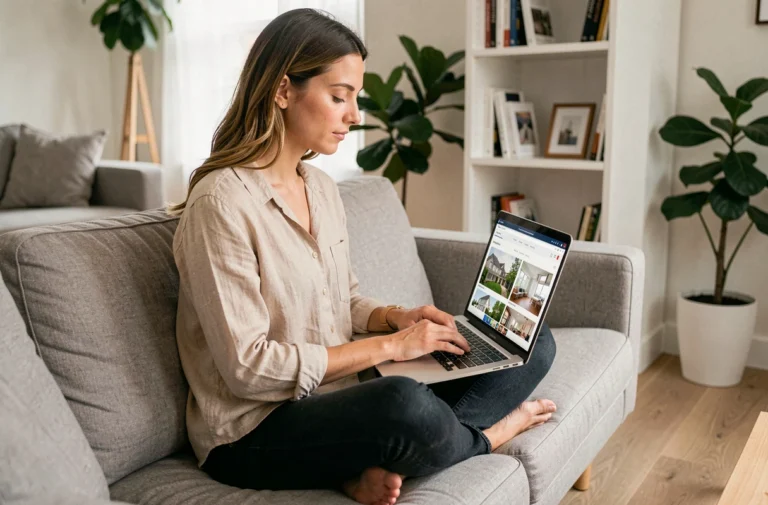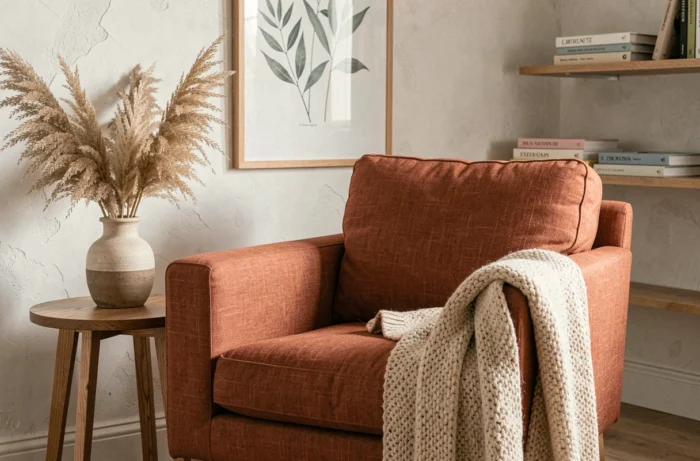
Interior decoration in 2026 is no longer limited to choosing a paint color or a cushion that matches the sofa. The materials used to transform a space have consequences on air quality, the sustainability of the layout, and the sensory perception of a room. The trends documented this year point towards less uniform, more tactile interiors, where personalization takes precedence over the reproduction of standardized models.
Indoor air quality: an underestimated decor criterion
Paints, varnishes, adhesives, floor coverings, and new furniture can emit volatile organic compounds (VOCs) for weeks after installation. This topic remains largely absent from mainstream decoration guides, which focus on visual appeal.
In France, the “indoor air emissions” label has been mandatory since September 1, 2013, following the decree of April 19, 2011. Reading this label before purchasing wall coverings or particle board furniture allows you to filter out the most emitting products.
When considering transforming your interior with decoration, it is worth comparing products based on this health criterion as much as on their color. To explore approaches that integrate these parameters, you can access Parlons Déco and consult various layout ideas.
The reflex to adopt: systematically check the emission class, especially for closed rooms (bedroom, office) where air renewal is often limited.
Tactile materials and organic shapes: the trendy decoration of 2026
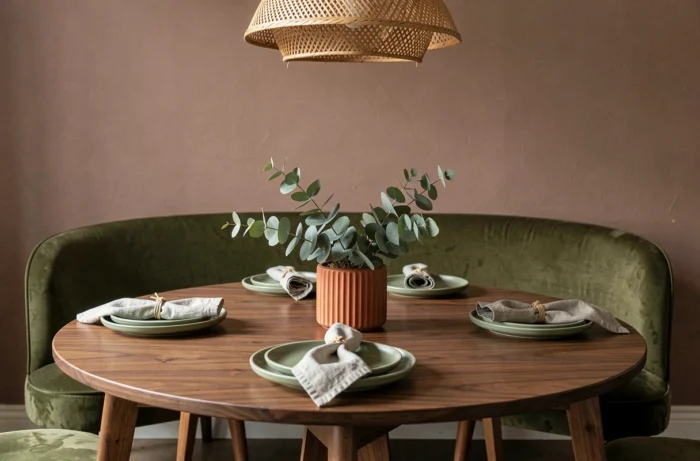
The documented decoration trends for 2026 move away from the very neutral interiors that have dominated social media in recent years. Raw materials, organic shapes, and tactile textures are gaining ground in living rooms, bedrooms, and even kitchens.
Concretely, this translates into the return of artisanal ceramics (vases, lighting, decorative objects), unvarnished woods, and textiles with visible weaves. Artisanal ceramics are presented as a refuge material in the face of the proliferation of mass-produced objects.
Fragmented color palettes by room
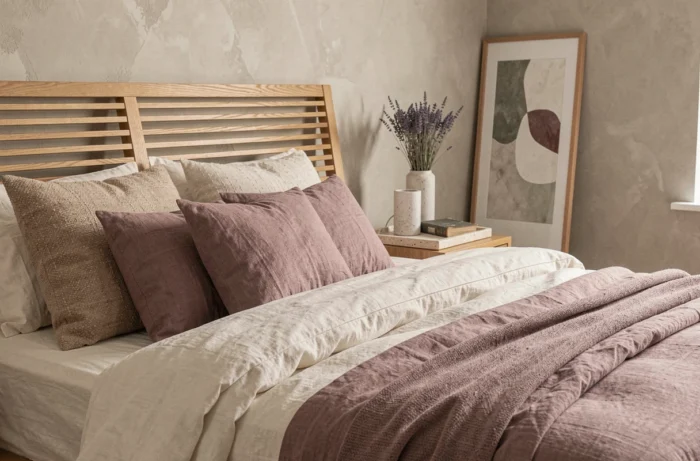
Color palettes are becoming fragmented. Instead of applying the same color scheme throughout the space, the trend encourages adapting the color to the function of each room. A living room may feature warm tones (tobacco brown, eggplant, lime) while a bedroom remains in more muted shades.
This approach requires a minimum of coherence between passage rooms. The common thread can be a material (light wood, linen) rather than a single color. Field feedback varies on whether a too-splintered palette visually fatigues or, conversely, energizes circulation in a home.
Reuse and design: decorating with recovered materials
Reuse in decoration has long been associated with an economic approach, even an aesthetic compromise. This perception is evolving. Recent projects show that recovered or upcycled materials can produce desirable layouts, not just functional ones.
Documented initiatives in the design sector seek to prove that reuse can compete with new materials visually, using reclaimed wood, upcycled metals, or refurbished textiles as the basis for contemporary furniture.
What reuse changes in decorative practice
- The recovered piece of furniture or object often imposes its dimensions and color, which requires building the rest of the ambiance around it, rather than following a pre-established plan.
- Finishes vary from piece to piece: two chairs from the same recovery lot will not be identical, creating an embraced visual asymmetry.
- The search time replaces ordering time: finding the right piece can take several weeks, which slows down the project but personalizes the result.
The available data does not allow for a conclusion on the overall environmental impact of decorative reuse compared to new purchases, as collection and transformation circuits remain very heterogeneous.
Living room and kitchen decoration: two spaces, two logics
The living room concentrates the majority of online decor advice. The kitchen, on the other hand, is often treated purely from a functional perspective. The 2026 trends blur this boundary.
The living room is moving towards more sensory spaces, with multiple lighting sources (accent lamp, low-voltage garland, dimmable pendant) and layered textiles (throw, rug, heavy curtains). The stated goal is to create a modifiable atmosphere according to the time of day.
The kitchen, for its part, borrows decorative codes from the living room: decorative ceramics can now be found on open shelves, colors on the walls (and not just white tiles), and lighting chosen for its design as much as for its brightness.
Points of caution for these two spaces
- In the living room, the multiplication of light sources creates depth, but each added light fixture increases electricity consumption: prioritize low-energy LED bulbs.
- In the kitchen, decorative materials must withstand humidity and grease splashes, which limits options for wallpaper or textile wall coverings.
- For both rooms, the trend towards furniture with rounded shapes (curves, tapered legs) requires checking stability, especially with children or pets.
Transforming your interior with decoration relies less on the accumulation of objects than on the coherence between materials, colors, and the actual use of each room. The health label of products, the choice of raw materials rather than uniform finishes, and the logic of reuse outline a framework where decoration is not just an aesthetic gesture. The result depends as much on the time spent selecting the right elements as on the budget allocated.