
An orange engine light that comes on a few kilometers after a full tank of fuel almost always points to the evaporative emission control system (EVAP) or an air/fuel mixture issue related to refueling. Before considering a serious mechanical failure, it is important to distinguish the mode of the warning light and check a few specific points under the hood and at the tank level.
EVAP System and Vapor Pressure: The Cause Ignored by Mainstream Articles
On gasoline vehicles compliant with recent emissions standards, the fuel vapor recovery system (EVAP) continuously monitors the tightness of the circuit between the tank and the canister. After refueling, the ECU initiates a pressure test to ensure that the circuit is airtight.
If the fuel cap is not locked with a click, or if the cap’s O-ring is cracked, the drop in pressure is enough to trigger a fault code (often P0440, P0442, or P0456 on the OBD connector). The light then comes on without any noticeable driving symptoms. We regularly observe this scenario on vehicles less than five years old where the cap has simply been replaced too quickly at the station.
These systems have become more sensitive with the tightening of evaporative emission thresholds. A micro-leak that older generations of ECUs would have tolerated now causes the orange engine light to illuminate as early as the first driving cycle after refueling. To deepen the diagnosis in this specific context, the Ceze website to discover details the checks to be performed step by step.
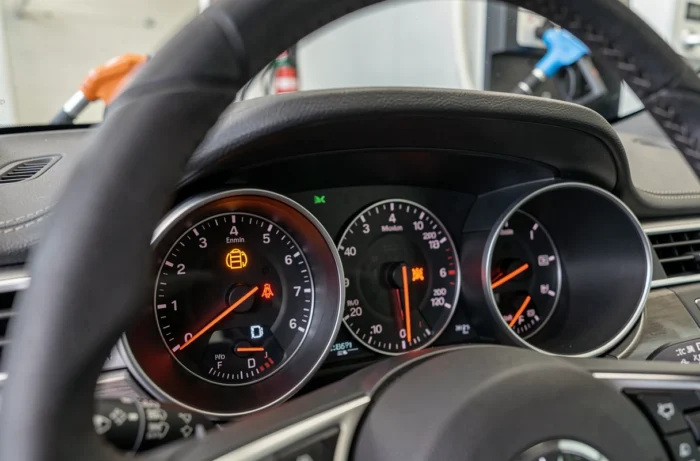
Steady or Flashing Engine Light After Refueling: Two Radically Different Situations
The distinction between steady/flashing changes the severity of the diagnosis and the immediate action to take.
Steady Orange Light
A light that stays on continuously, without loss of power or abnormal noise, indicates a non-critical recorded emissions fault. The vehicle can reach a garage while driving at a moderate speed. The most common causes after refueling include:
- Improperly clipped fuel cap or worn seal, causing a leak in the EVAP circuit.
- Temporary disruption of the air/fuel mixture if the tank was nearly empty before refueling (the lambda sensor detects a richness deviation until the system stabilizes).
- Micro-bubbles of air in the fuel circuit on certain diesels, especially after refueling with the engine running or at a high-flow pump.
Flashing Orange Light
A flashing engine light indicates ongoing misfires. Continuing to drive under these conditions exposes the catalytic converter to rapid overheating and costly damage. We recommend stopping as soon as safety allows and having the vehicle towed.
After refueling, a flashing light may signal contaminated fuel (water in the tank, incorrect fuel type) or an injector that remained open during the restart phase. In both cases, an immediate OBD diagnosis is the only way to confirm the cause before any further driving attempts.
Fuel Error and Contamination: Fault Codes to Monitor
Putting SP95 in a diesel or diesel in a gasoline vehicle remains a more common mistake than one might think. The consequences vary depending on the type of error and the amount introduced.
On a diesel mistakenly fueled with gasoline, the first symptoms appear quickly: the engine runs unevenly, unusual smoke comes from the exhaust, and the engine light comes on (often accompanied by codes related to common rail pressure, such as P0087 or P0088). Do not start the vehicle if the error is detected before ignition significantly limits damage to the injectors and high-pressure pump.
Contamination by water is another scenario after refueling. Some stations with old or poorly maintained tanks may deliver fuel laden with water. The fuel filter saturates, the engine stalls at idle, and the ECU records supply faults. On vehicles equipped with a water sensor in the diesel filter, a dedicated light comes on even before the engine light.
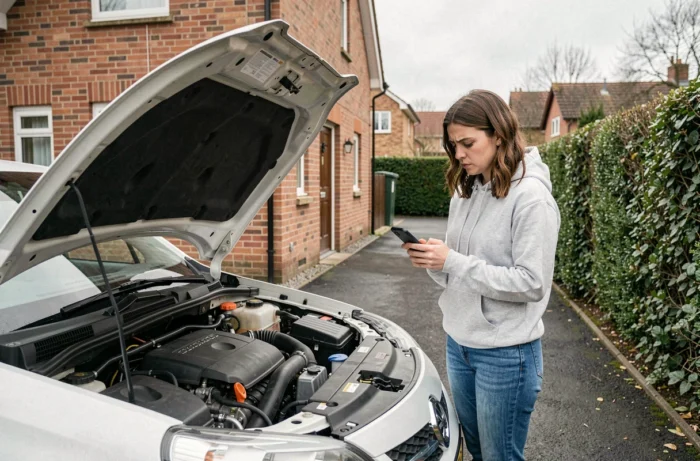
OBD Diagnostic Procedure After a Suspicious Refuel
An OBD device connected to the standardized port (present on all gasoline vehicles since 2001 and diesel since 2004) allows reading the fault codes recorded by the ECU. The procedure after a suspicious refuel follows a logical order.
- Read the fault codes (DTC) without erasing: note the exact code and check if it is related to the EVAP circuit, lambda sensor, misfires, or fuel supply.
- Check real-time data (richness values, rail pressure, catalyst temperature) to confirm that the values return to the normal range after a few minutes of operation.
- Visually inspect the fuel cap, the seal, and close it with a click.
- Erase the fault code only after identifying and correcting the cause. An erasure without correction will lead to the light coming back on in the next cycle.
On some vehicles, the light turns off by itself after three consecutive driving cycles without the fault reoccurring. If the cap was simply closed improperly, the light disappears without mechanical intervention after a few trips.
A often overlooked point: the WLTP values displayed by the manufacturer assume a perfectly sealed evaporative circuit. A chronic EVAP leak, even without noticeable symptoms, slightly increases actual consumption and skews pollutant measurements. Correcting the fault quickly preserves both the catalyst and the fuel budget.
The engine light after refueling is not trivial, but it is rarely catastrophic when it remains steady. Checking the cap, reading the OBD codes, and observing the engine behavior on subsequent trips is usually sufficient to make a reliable diagnosis without needing roadside assistance.