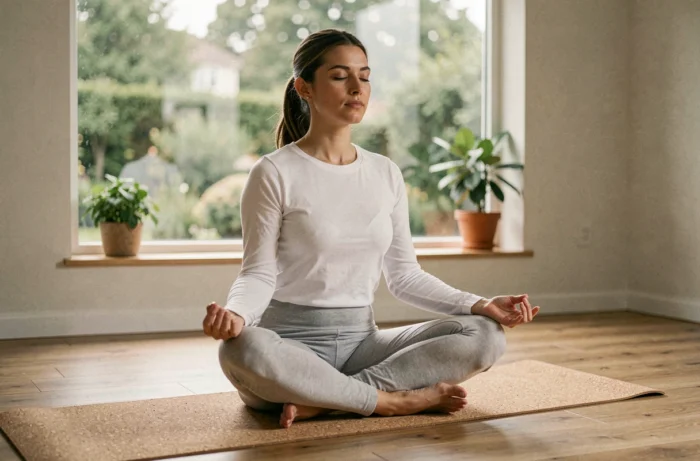
After a day spent sitting in front of a screen, the lower back stiffens, the shoulders rise towards the ears, and breathing becomes shallow. Yoga specifically addresses these accumulated tensions. This practice, which combines postures, breathing, and attention to sensations, offers a holistic approach where the body and mind work together. Its benefits go beyond mere physical activity, but they deserve to be examined with precision rather than through vague promises.
What yoga changes in respiratory mechanics
Have you ever noticed that your breath gets stuck when you are stressed? The diaphragm, this dome-shaped muscle under the ribs, contracts and limits the range of breathing. Pranayama exercises (breath control) train this muscle to gradually relax.
A protocol tested on perimenopausal women aged 40 to 55 combined Bhramari pranayama and chakra meditation for twelve weeks. The results showed a significant decrease in perceived stress and a marked improvement in sleep. This type of slow and controlled breathing acts on the parasympathetic nervous system, which slows down the “alert” mode.
In practice, a yoga session often dedicates the first few minutes to breathing. You inhale through the nose while expanding the belly, then exhale slowly. This work on the breath precedes the postures and conditions the entire practice. Resources like lesjardinsduyoga.fr help to better understand how to structure this respiratory approach in regular practice.
Yoga and stress: real results but not miraculous
The majority of articles on the subject present yoga as a universal remedy for anxiety. Recent research provides a more nuanced view.
A meta-analysis published in 2024 on depressive disorders concludes that yoga moderately reduces the severity of depression in the short term compared to groups without intervention. However, this difference fades when comparing yoga to other active interventions: structured therapies, exercise programs, therapeutic education.
Another nuance: a synthesis focused on hatha yoga does not show a clear effect on resistant or chronic depression compared to standard treatments. The benefit remains mainly visible against simple psychoeducation programs.
This does not disqualify the discipline. It means that yoga complements medical support without replacing it. For a healthy person going through a period of tension, the combination of postures, breathing, and meditation offers a structuring framework. For a clinical disorder, it works better as a complement than as a standalone solution.
Postures and muscle strengthening: what really happens in the body
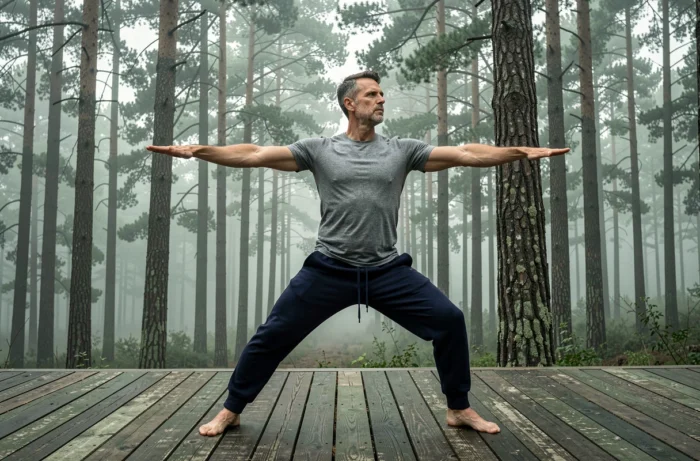
Holding a posture like Warrior II for several breaths engages the quadriceps, glutes, and stabilizing muscles of the pelvis. Yoga does not develop muscle mass like weight training, but it works the deep muscles that maintain posture in daily life.
Here’s what the postures engage according to their category:
- Standing postures (warrior, triangle) strengthen the legs and improve proprioceptive balance, the body’s ability to locate itself in space.
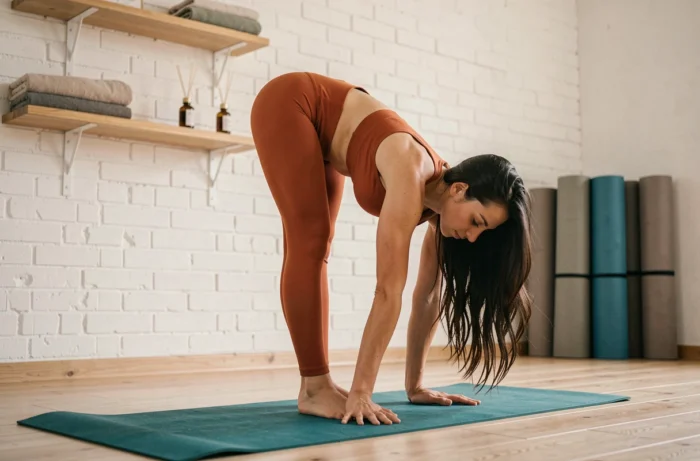
- Forward bends (standing forward bend, downward-facing dog) stretch the posterior chain, from the calves to the neck, and relieve lumbar tension related to prolonged sitting.
- Twists (seated half-twist, extended twist) mobilize the spine in rotation, a movement rarely practiced in everyday life.
- Arm-supporting postures (plank, chaturanga) engage the shoulders, abdominals, and wrists, with a core work comparable to that of Pilates.
The difference with a traditional fitness class lies in the rhythm. In vinyasa, the sequences are fluid and synchronized with the breath. Each movement lasts the time of an inhalation or exhalation. This slow tempo forces the muscles to work isometrically, meaning in sustained contraction without rapid movement.
Choosing your yoga style according to your concrete goal
Not all yoga styles produce the same effects. Rather than listing dozens of variations, let’s focus on three common profiles.
Reducing back pain and gaining flexibility
Hatha yoga is well-suited for this goal. The postures are held for a long time, with gradual adjustments. The session progresses slowly, allowing time to explore each position without forcing. It is also the most accessible style for beginners.
Seeking sustained physical effort
Vinyasa or Ashtanga link postures without pause. Heart rate rises, and sweating begins. These styles develop muscular endurance and coordination. They are suitable for already active individuals who want a demanding practice.
Improving sleep and recovery
Yoga nidra (yoga of sleep) and yin yoga target deep relaxation. In yin yoga, the floor postures are held for several minutes, stretching the fascia, the connective tissues that envelop the muscles. A yin yoga session before bed reduces residual muscle tension and facilitates falling asleep.
Integrating meditation into daily yoga practice
Meditation is not an optional bonus in yoga. It is one of its pillars. Even five minutes of focusing on the breath at the end of a session changes the quality of attention for the hours that follow.
The simplest exercise is to sit, close your eyes, and count your exhalations from one to ten before starting over. When the mind wanders (and it will wander), you start again at one. This is not a failure; it is the very mechanism of attentional training.
Regularity matters more than duration. Ten minutes every morning produce more effects than an hour on Sunday. Yoga provides a framework for this regularity: the physical session prepares the body to remain still, the breath calms the nervous system, and meditation extends this state of presence.
Yoga functions as an assembly of practices that mutually reinforce each other. Postures, breathing, and meditation do not have the same effect when taken in isolation. It is their regular combination that sustainably changes how the body manages stress and how the mind maintains its attention.