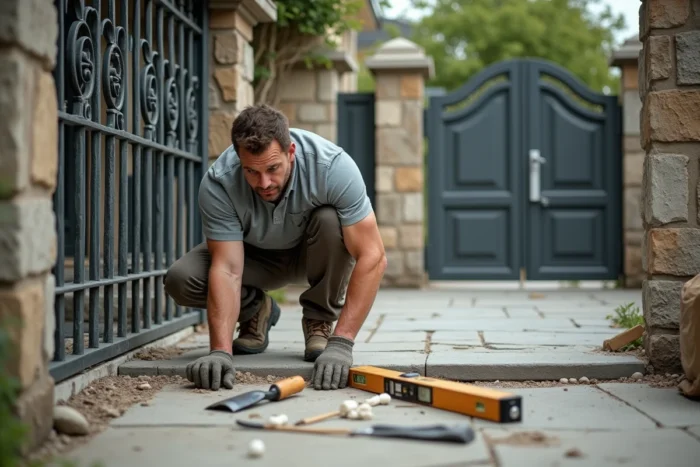
A cracked or sunken gate threshold is not just an aesthetic issue. The sliding gate rail becomes misaligned, the leaf rubs, water stagnates and seeps under the masonry. In recent years, there has also been an increase in threshold repairs after heavy rain episodes, with the erosion of concrete accelerating the problems. Here are ten concrete techniques to fix a damaged gate threshold while preserving the alignment of the rail, water drainage, and accessibility.
1. Diagnose the level difference before any intervention
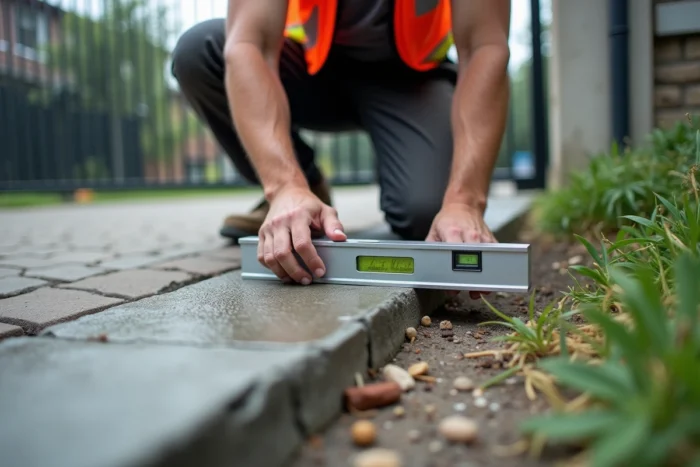
Before pouring anything, place a laser level or a mason’s rule along the entire length of the threshold. In a specialized forum, a homeowner reported a 3 cm difference over 5 m between the left and right sides of their threshold, discovered only when installing the rail.
This diagnosis determines the choice of method. A defect of less than 1 cm can be corrected with leveling compound. Beyond that, partial formwork or a thickness repair should be considered. Measuring the difference along the entire length of the threshold avoids having to repeat the operation six months later.
2. Chip away the degraded concrete down to the sound substrate
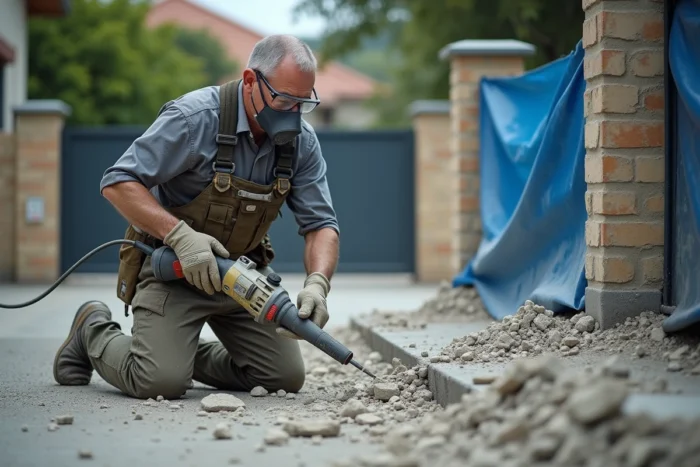
There are often tips for fixing a gate threshold that involve applying mortar directly onto the damaged surface. The result rarely lasts more than a season. The repeated passage of vehicles detaches the applied layer if it does not adhere to a clean and cohesive substrate.
Use a chisel or jackhammer to remove all the crumbling parts until you reach hard concrete. The cut should create a clean, vertical edge if possible, so that the new pour can anchor properly.
3. Reinforce the repair to withstand vehicle traffic
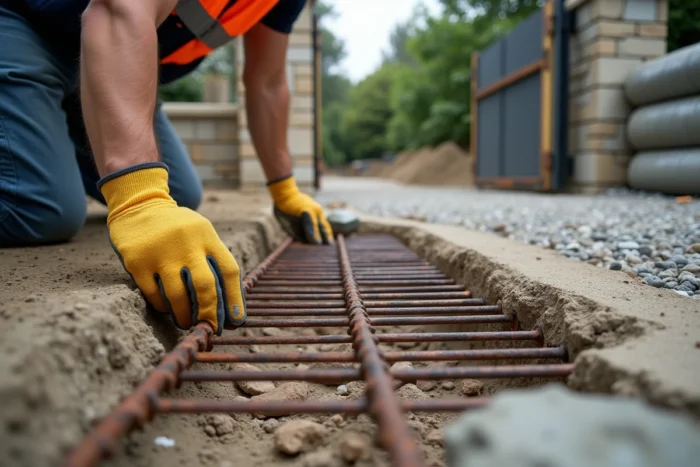
A gate threshold bears the weight of cars, sometimes delivery trucks. A welded mesh embedded in the repair concrete prevents cracking under load. The reinforcement is anchored in the existing concrete by drilling holes and sealing threaded rods or rebar into them.
Without this reinforcement, the fiber-reinforced screed alone is insufficient beyond a few centimeters in thickness. Field reports show that “DIY” repairs (improvised leveling, mismatched wedges) ultimately misalign the rail and can void the warranty of the motorized gate.
4. Formwork with an integrated water drainage slope
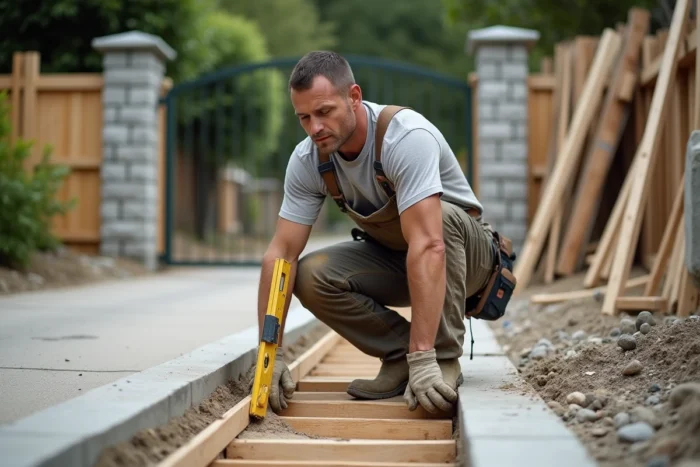
Stagnant water is the primary cause of recurring degradation of a threshold. When setting up the formwork, integrate a minimum slope towards the outside of the property or towards a drain.
The formwork is made with wooden boards propped against the pillars. The level is checked while incorporating the desired slope. Planning for water drainage from the outset avoids having to mill grooves afterward, which weakens the surface.
5. Use a structural repair mortar instead of a standard leveling compound
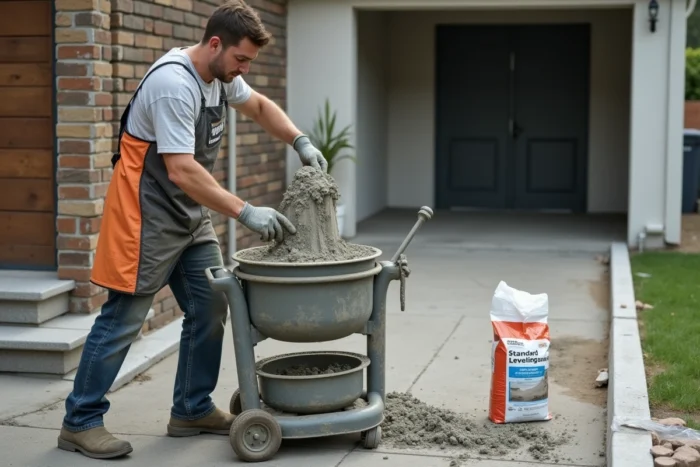
A self-leveling compound is suitable for millimeter differences indoors. For a gate threshold exposed to frost, rain, and traffic, choose a shrinkage-compensated repair mortar formulated for outdoor use.
This type of product offers mechanical resistance suitable for rolling loads. It is applied in one or more passes depending on the thickness to be filled, respecting drying times between layers.
6. Coordinate the threshold renovation with the gate adjustment
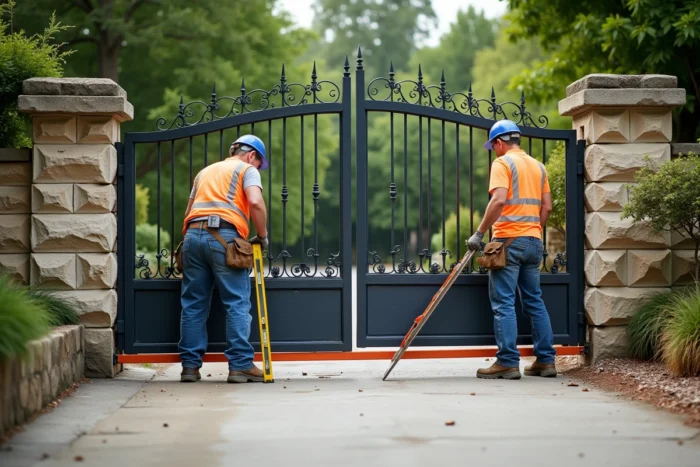
Correcting the level of the threshold without touching the gate often creates new friction. Professionals in exterior closures emphasize the need to realign the hinges, rail, and stops after each intervention on the threshold.
For a sliding gate, check that the rail is perfectly straight and at the correct level relative to the rollers. For a swinging gate, check the hinges and ground clearance. Neglecting this step can cause the motor to jam or even fail.
7. Comply with the accessibility threshold for disabled persons at the pedestrian crossing
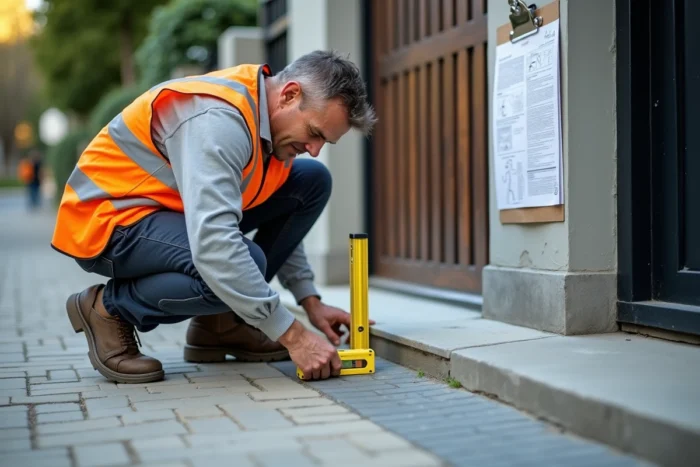
If the gate includes a pedestrian door, the threshold rise must remain compatible with wheelchair passage. Regulations impose a limited rise, with a beveled edge or a gentle slope for crossing.
During the repair, the threshold is leveled at the pedestrian door or a short ramp is installed. An accessible threshold does not compromise strength if the reinforcement is properly sized. Feedback varies on this point depending on the type of gate and the terrain configuration, but the principle remains to never create a sharp step on the pedestrian side.
8. Protect the new threshold with a waterproofing treatment
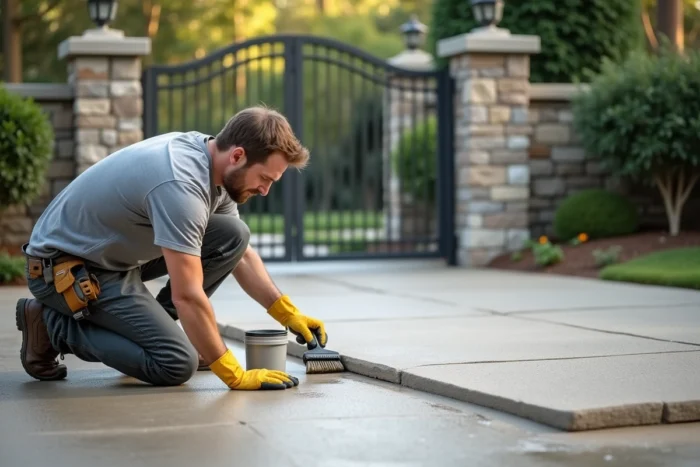
Raw concrete absorbs water, freezes, and cracks. After complete drying of the repair, apply an impregnating waterproofing agent that penetrates the pores without forming a surface film.
This treatment extends the lifespan of the threshold, especially in regions subject to frequent freeze-thaw cycles. The application should be renewed every few years depending on exposure and traffic.
9. Install a protective metal profile on the edge of the threshold
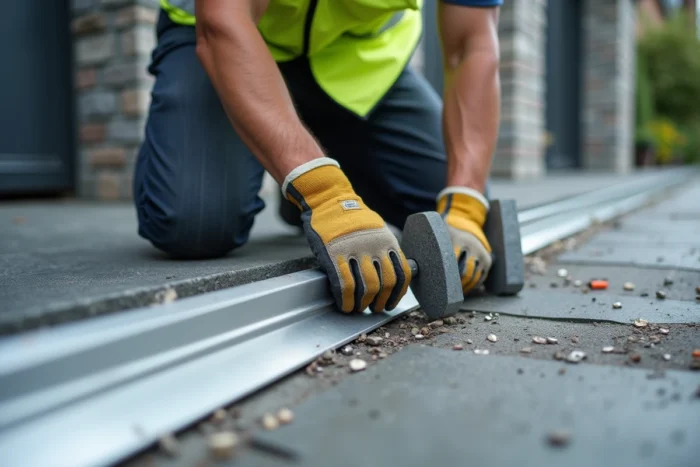
The edge of the threshold absorbs the impact of wheels and scraping from the gate. An angle iron made of galvanized or stainless steel, sealed into the fresh concrete, protects this vulnerable area.
The profile is chosen based on the type of gate:
- L-shaped angle for a swinging gate, placed on the upper edge of the threshold
- U-shaped profile embedded for a sliding gate rail, guiding the rollers while protecting the concrete
- Flat stainless steel for a pedestrian door, discreet and resistant to corrosion
10. Document the intervention to preserve the warranty of the motorized gate

Installers of motorized gates often condition their warranty on the integrity of the threshold and rail. An undocumented repair can be interpreted as a non-compliant modification.
Photograph each step (initial state, chipping, reinforcement, formwork, pouring, finishing). Keep the technical data sheets of the products used. A photo file and product sheets protect the warranty in case of disputes with the installer or the gate manufacturer.
Fixing a damaged gate threshold requires masonry skills, but also attention to the overall functioning of the installation. A well-repaired threshold, properly reinforced, with its drainage slope and protective profile, lasts for years without causing problems for the gate or pedestrian access.